I am offering a fully-funded PhD position to a highly ambitious student at the intersection of digital twins and AI in the nuclear domain and with a start in September 2027.
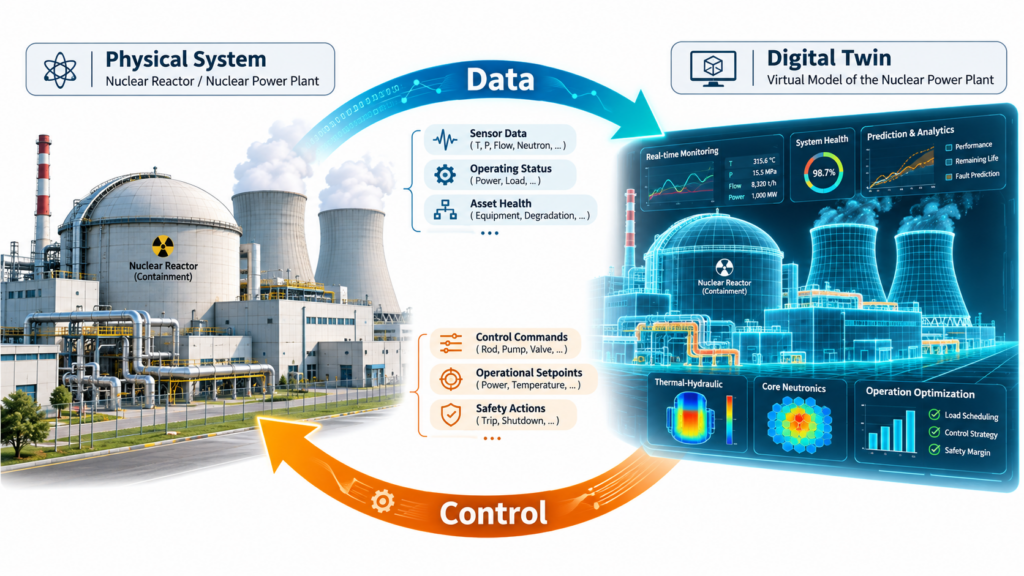
Scope of research
Together with our colleagues in materials science and nuclear engineering, we are building the next generation of AI-enhanced digital twins for the lifetime prediction of nuclear reactors.
Details upon inquiry.
Setup
▸ Earn a PhD degree from a globally renowned university: McMaster University.
▸ Collaborate with researchers and engineers across Ontario.
▸ Solve real-life problems as you develop new methods, techniques, and tools.
Expected Background
▸ Master’s degree in software engineering, computer science, or a related area
▸ Rock-solid (!!!) software development skills
▸ At least Python, preferably Java, too, ideally C/C++
▸ I cannot emphasize this enough. The application process involves an in-depth interview with a seasoned industry expert: me.
▸ Strong background in machine learning/AI
▸ Experience in training NNs, and the ability to pick up new concepts (PINNs, GFlowNets, etc)
▸ Experience with ML frameworks (PyTorch, Tensorflow, Stable Baselines, etc). Note that this is not an LLM project!
▸ Sufficiently high GPA
▸ Highly autonomous and proactive personality
▸ Ours is a particularly high-paced research environment.
What is not expected of you?
▸ Being a master of every subtopic. In research, we typically learn as we go.
▸ Being a complete researcher on day one. We all have to start somewhere. You will receive intensive training tailored to your specific needs and goals, will work closely with your supervisors, and will be called to collaborations with our peers in and outside of the lab.
▸ Prior publications, while certainly a plus, are not expected. Both supervisors are experienced authors who will get you published and teach you the art of scientific writing.
As a PhD student, you will…
▸ Conduct world-class scientific research in the frontiers of software engineering / computer science
▸ Develop novel methods, techniques, and tools for the design and development of complex engineered systems
▸ Become part of a lively and particularly active research network, and collaborate with international peers
▸ Publish at top venues and in top journals of our field
▸ Attend top international conferences to present your work (financed by our labs)
Expected Research OUTPUT
There is no predetermined minimum number of papers you have to produce annually.
However, it is fully expected that you dedicate your time to conducting impactful research and to mastering key scientific methods. You will be part of a world-class research environment at McMaster University, filled with ambitious yet friendly and inclusive folks.
We are looking for someone who can enjoy the process of exploration despite all its uncertainty, as well as the process of knowledge creation and communication (including written publication and oral presentations).
Application process
Take the following two steps in any order:
- Reach out to Dr. David directly in an email with the following subject: “PhD in DT+AI in nuclear”. Attach a CV and in your email, please outline your background and why you see yourself a good candidate for this position.
- LLM-generated stock emails are automatically discarded and do not get a response.
- Apply here: https://applygrad.mcmaster.ca/portal/start_your_app. Indicate Dr. David’s name in your application.
About YOUR FUTURE UniversitIES
McMaster University. One of the four Canadian Universities consistently ranked in the world’s top 100 in the Time Higher Education rankings, McMaster has a proud tradition of academic and research excellence, evidenced by the achievements of our best and brightest whose ranks include three Nobel Prize winners, global business leaders, technological innovators, prominent politicians, public intellectuals, philanthropists and performers. The McMaster community includes 21,441 undergraduate students, 3,519 graduate students, 1,413 full-time faculty, and 170,654 alumni, based in 137 countries worldwide.
The Department of Computing and Software is home to cutting-edge research in many areas of computer science, software engineering, and mechatronics.